TL-618 TL-619 Access Road
Innovation on a Challenging Hillside: The TL618-TL619 Access Road Project
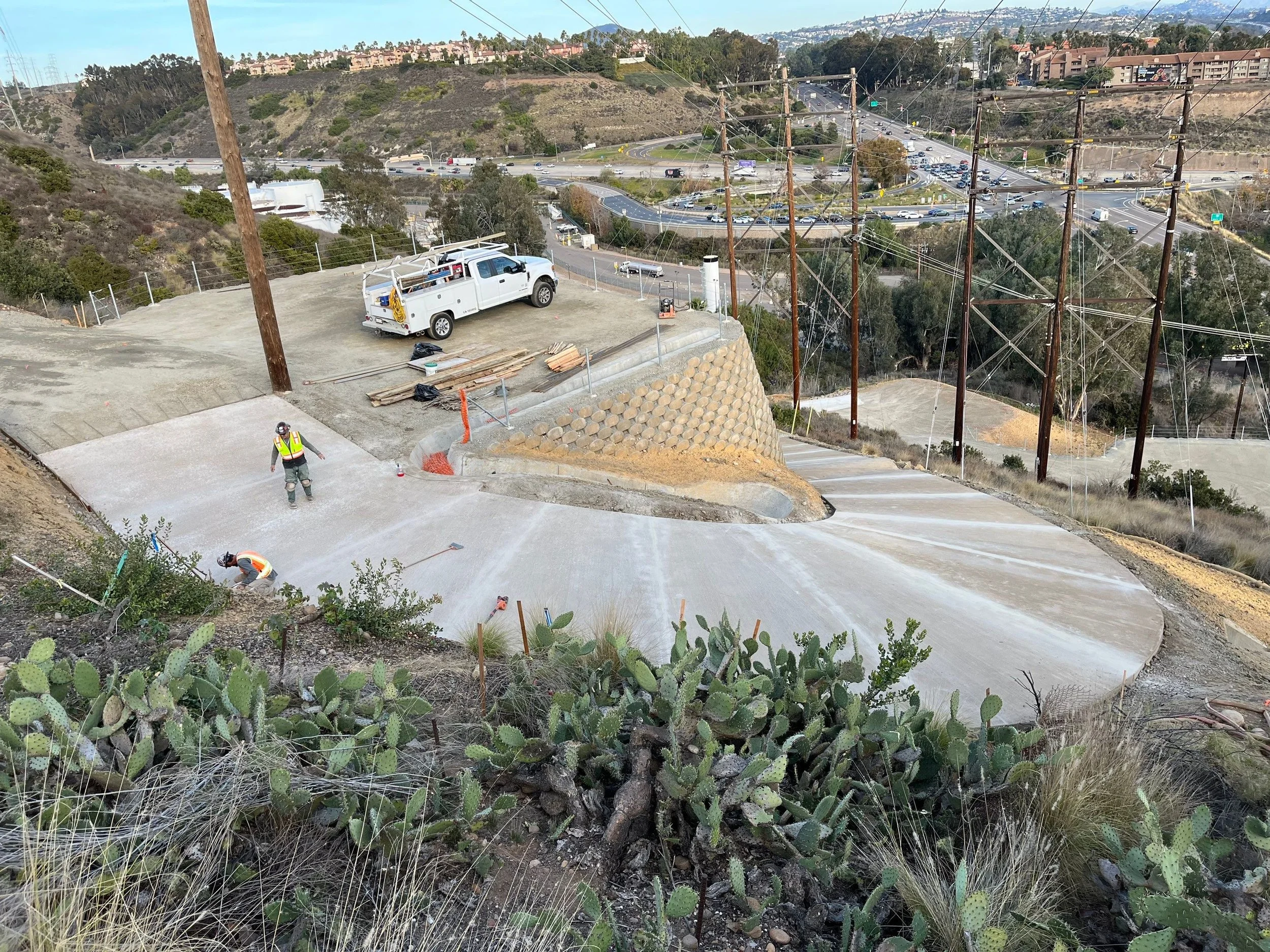
The TL618-TL619 West Access Road project presented Alvarez and Shaw, Inc. with a construction challenge that many believed could not be overcome using conventional methods. Located on steep terrain above Mission Valley, the project required the construction of a reinforced concrete access road and maintenance pads around existing electrical infrastructure.
The demanding grades, tight curves, limited equipment access, and proximity to energized transmission facilities made every stage of the project difficult. Completing the concrete roadway would ultimately require more than careful planning. It would require an original solution developed in the field.
Building on Difficult Terrain
The project was designed to provide safe, reliable access to transmission structures TL618 and TL619. The work included grading, concrete paving, maintenance pads, retaining structures, drainage improvements, and erosion-control measures.
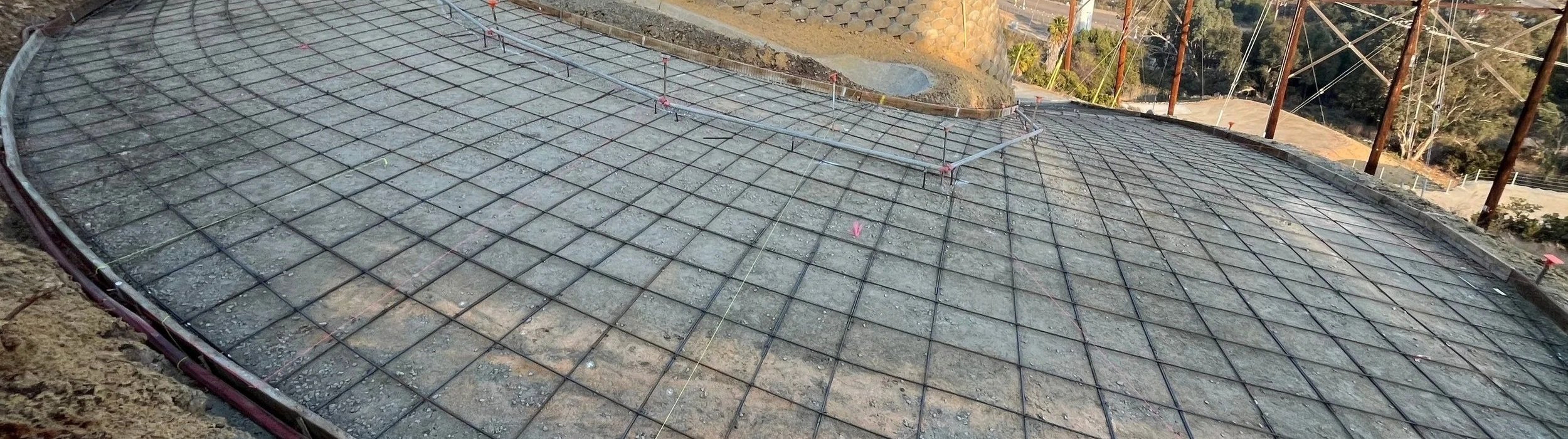
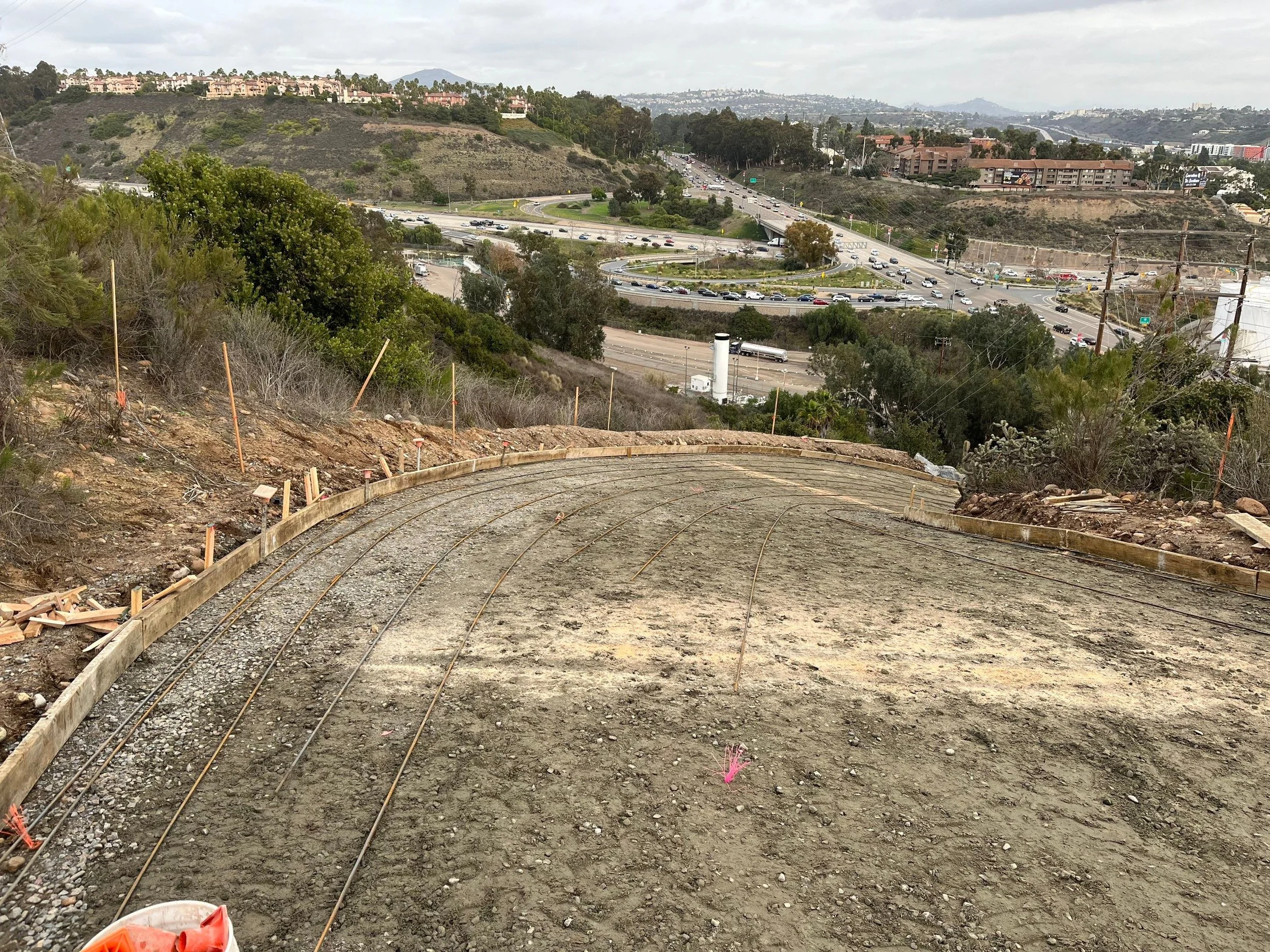
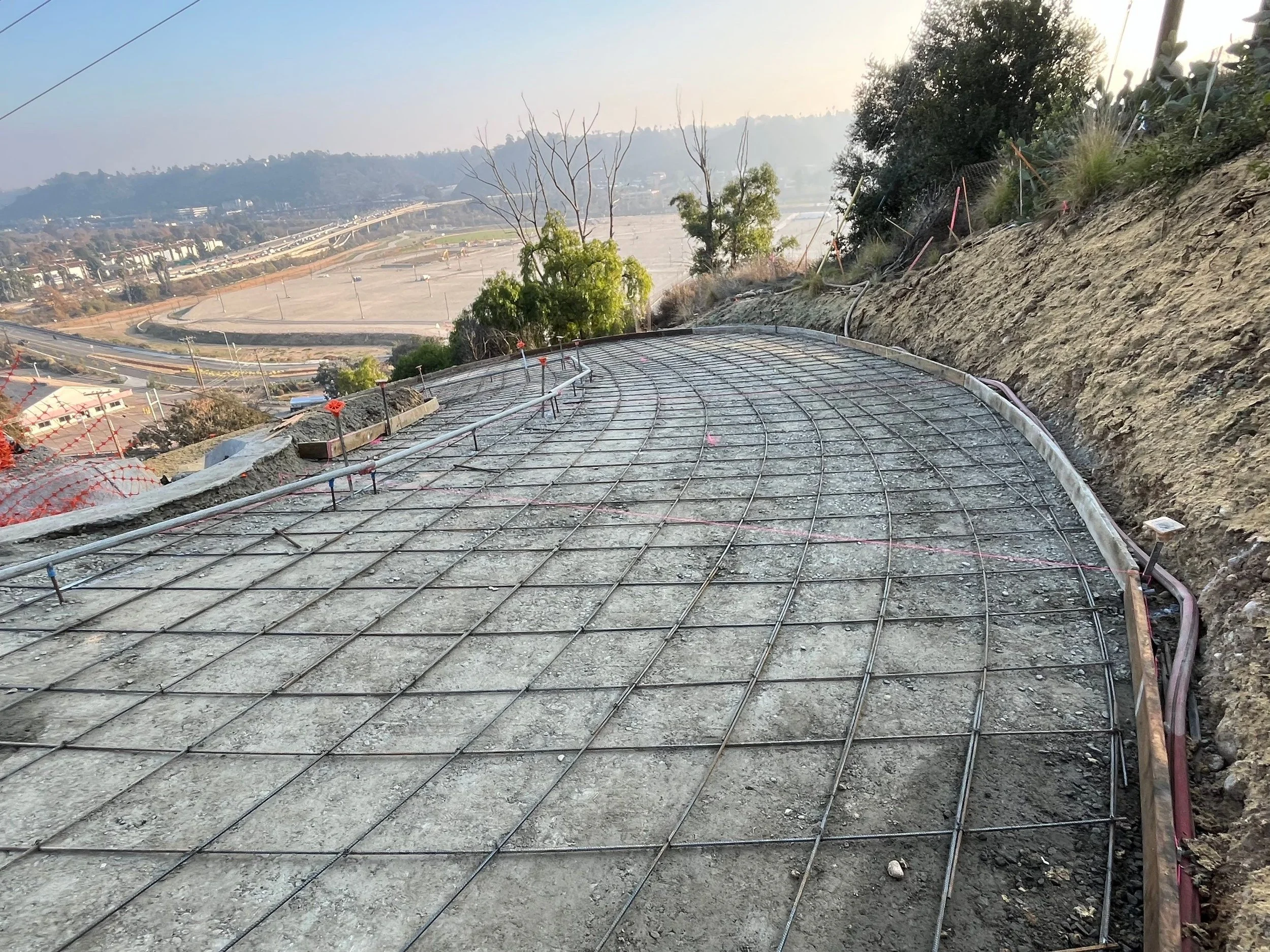
Before concrete could be placed, the hillside had to be carefully prepared. Crews graded the winding roadway, installed formwork, placed reinforcing steel, and constructed retaining systems to support the new improvements. The steep slope and sweeping curves required precise coordination to maintain the designed elevations, drainage patterns, and roadway geometry.
Once the preparation was complete, the team faced its greatest challenge: how to properly screed and finish concrete on such a steep, curved roadway.
Fabricating a Solution
Traditional concrete screeding methods were not practical under the conditions. The grade was too steep, the roadway alignment was too complex, and working entirely by hand would have made it extremely difficult to maintain a consistent surface.
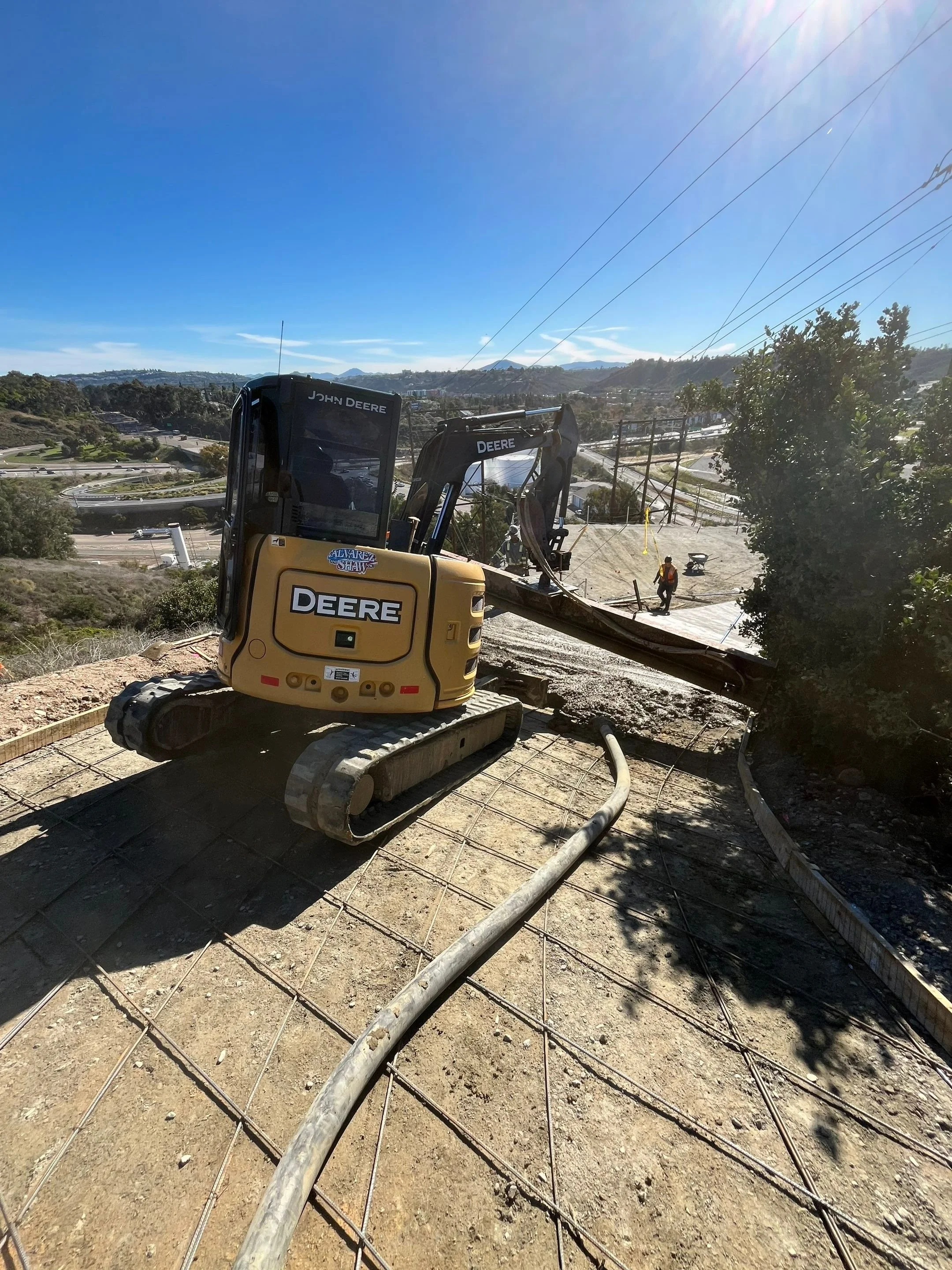
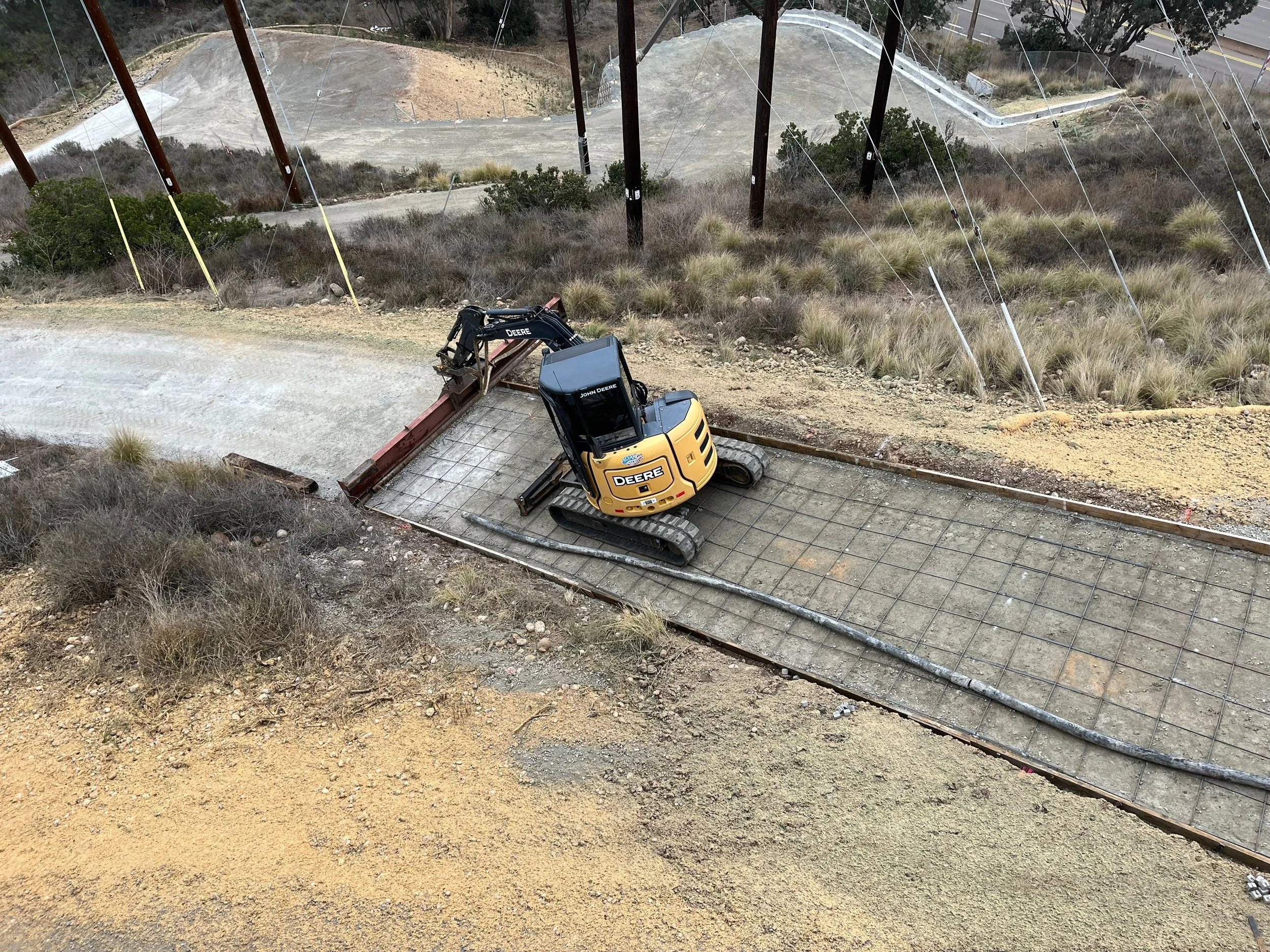
Chase Alvarez, owner of Alvarez and Shaw, responded by fabricating a custom roller screed that could be attached to a mini excavator.
The excavator provided the stability, reach, and controlled movement necessary to operate on the challenging hillside. As concrete was poured, Alvarez used the excavator-mounted screed to roll the concrete uphill. The custom attachment helped shape and consolidate the fresh concrete while allowing the crew to maintain control of the roadway’s surface and grade.
It was an unconventional approach to a problem that many had considered nearly impossible.
Rather than allowing the hillside to dictate what could not be done, Alvarez designed a tool specifically for the conditions. The solution combined fabrication, equipment operation, and practical concrete experience into a method tailored to the project.
Turning an Idea Into a Finished Road
The roller screed was only one part of a carefully coordinated placement operation. Concrete delivery, equipment movement, screeding, finishing, and curing all had to progress together. On a steep slope, delays or inconsistencies could affect the surface before the crew had an opportunity to correct it.
By moving the screed uphill as the concrete was placed, the team transformed a difficult pour into an organized sequence. The result was a continuous concrete access road capable of following the hillside’s steep grades and tight curves.
The completed road now connects the transmission facilities with stable maintenance areas, giving utility crews dependable access for future inspection and repair work.
Construction Driven by Ingenuity
The TL618-TL619 project demonstrates that successful construction is not always achieved by following a standard method. Some projects demand a solution that does not yet exist.
Chase Alvarez’s excavator-mounted roller screed became that solution. Fabricated for the unique conditions of the site and operated during the concrete placement, it accomplished what many believed would be impossible: screeding the winding roadway uphill on one of the project’s most demanding slopes.
The finished work stands as both a piece of essential infrastructure and an example of the ingenuity behind Alvarez and Shaw, Inc. When conventional equipment could not meet the challenge, the company built its own answer.